

Hey folks, ever found yourself staring at a light-density dry powder shipment-think things like food-grade flour, plastic resin pellets, or even some agrochemicals-and wondered if your go-to dry powder tank trailer can actually handle it? Spoiler: that's one of the most common questions I get as a Dry Powder Tank Trailer supplier, and it's way less "yes/no" and way more "it depends on a few key factors." Let's break this down like I'm chatting with a buddy who's just trying to avoid a mid-route powder spill.
First, let's clear up what we're even talking about here with light-density dry powders. Light density basically means anything with a bulk density lower than, say, 50 pounds per cubic foot (PCF). Heavy powders? Cement, dry lime, industrial fly ash-those clock in around 75–100 PCF, which is the usual stuff our standard Dry Powder Tank Trailer units are built for. Light ones are fluffier, take up way more space per pound, and act totally different when you're loading, transporting, and unloaded them. That's where the confusion starts: most people assume a tank built for heavy powders will work for light ones, but cutting corners here is a fast track to headaches.
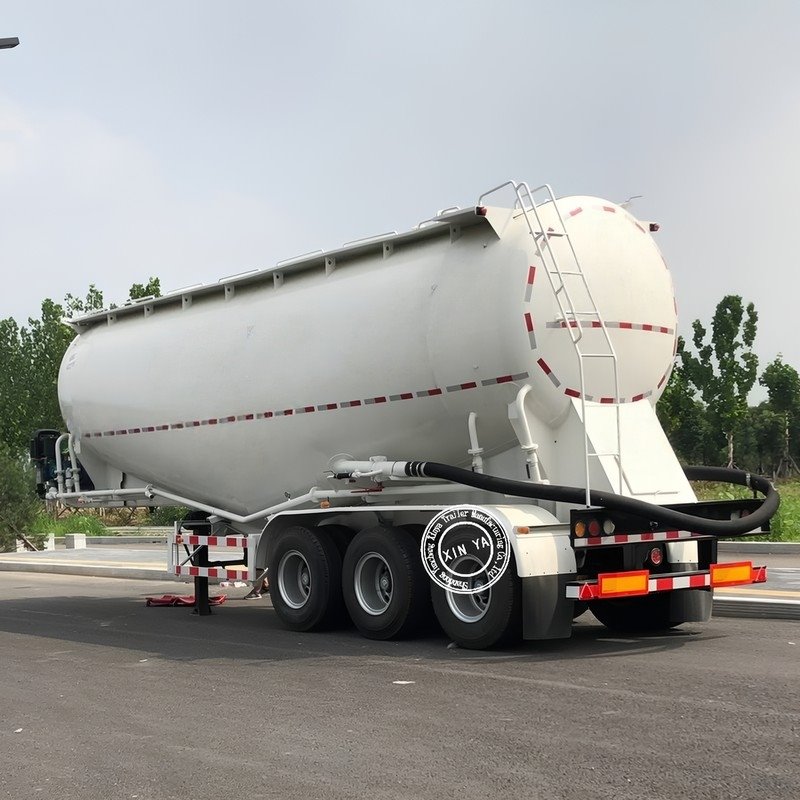
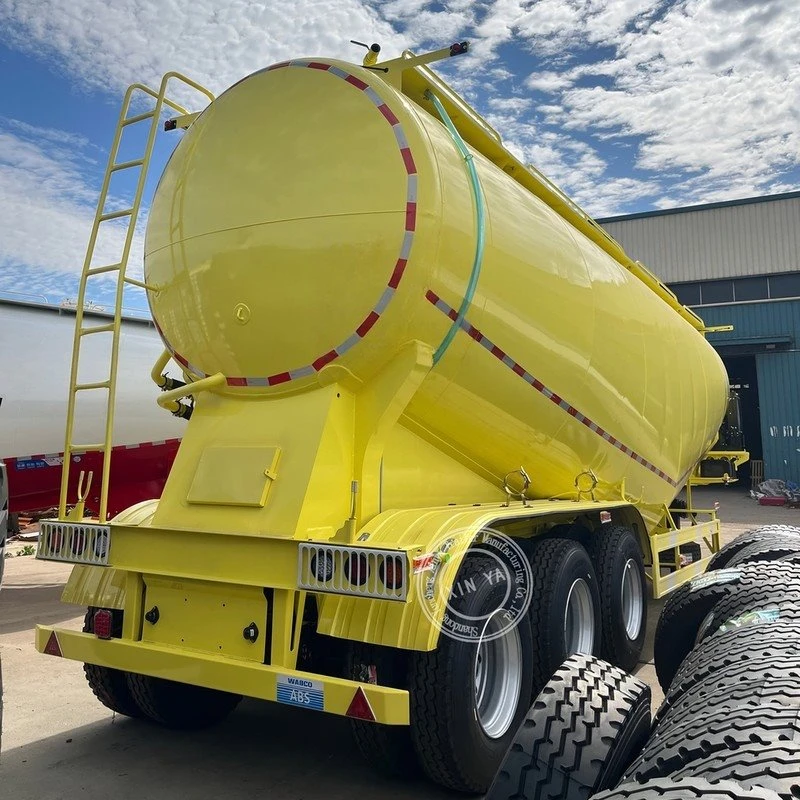
Let's start with the basics of how these trailers work. A dry powder tank isn't just a big metal barrel on wheels-its design is tailored to push powder out at the end of the trip using compressed air. That's key, right? No gravity chutes here, because powders are too fine to flow on their own. So, the two core parts that matter for light-density powders are the tank's internal structure and the air system's CFM (cubic feet per minute) rating.
Our standard heavy-duty tank for cement (which you can check out here: Cement Tank Semi Trailer) has a lot of internal baffles to keep dense powder from shifting around, and the air system's tuned to move heavier, coarser particles. Light-density powders, though, are way more prone to fluidization-they act like a liquid when air hits them. Too much air, and you'll end up with powder blowing out the pressure relief valves (we've seen it! One customer tried hauling plastic resin with a standard tank, and halfway to the job site, their entire load got vented over a highway). Too little air, and you can't get the powder out-we've had a food manufacturer tell us their standard tank left them with 10% of flour stuck inside after unload, which is a total waste for their budget.
Wait, but does that mean there's no way to make a dry powder tank work for light-density stuff? Nope-we've tweaked our designs specifically for that, and that's where a lot of customers get tripped up. Let's talk about internal tank design first. For light powders, we use what we call "soft baffles" instead of the rigid, heavy ones for dense powders. Soft baffles don't lock into the floor and walls as tightly, so when air hits, they let the fluffier powder flow evenly without creating dead spots. Also, the tank's sloped floors-wait, most people don't notice this, but not all powder tank floors are the same angle. For light density, we bump that slope up a bit (from 15 degrees to 18) so the powder slides easier when fluidized. That's a tiny change, but it makes a huge difference in unload efficiency.
Then there's the air system. Standard heavy-duty units have around 1,200 CFM compressors. For light-density powders, we knock that down to 800–900 CFM. Why? Because too much air will turn that fluffy powder into a mist that escapes through the vent-we've tested this ourselves: run 1,200 CFM on a tank loaded with 40 PCF polyethylene resin, and you'll lose 15% of the load in 10 minutes of driving. Dial that back to 850 CFM, and that number drops to less than 2%. It's not about making the air stronger, it's about matching it to the powder's density.
Now, let's get into real-world use cases. We've got two types of customers who ask about this: small-scale food processors hauling flour or sugar, and large chemical companies moving raw plastic resin for injection molding. For the small guys, sometimes they think "a cheaper standard tank will work" to save cash, but that often backfires. Last year, a local bakery tried hauling bulk flour in a cement semi trailer (don't do that, by the way) and ended up with flour caking in the baffles because the standard tank's walls were too smooth-wait, no, actually, cement powder is coarser, so the standard tank has a rougher interior to grip it, and fine flour just stuck to that roughness. They lost $2,000 worth of flour before they switched to a Powder Tanker Trailer we customized for light food-grade powders, and now they cut their unload time in half.
For the big chemical clients, they have more flexibility, but they still get confused. A few months back, a plastic manufacturer called us asking about a unit that could haul both heavy polypropylene pellets (which are around 55 PCF, so light but denser than fine flour) and ultra-light polyethylene powder (38 PCF). Turns out, we have a mid-tier Dry Powder Tank Trailer with adjustable air settings-they can dial up the CFM for denser pellets and down for ultra-light powder. That's been a game-changer for them, because they don't have to own two separate trailers, which saves on maintenance and storage costs.
But wait, let's address the "dry" part, because some people mix up dry powder trailers with liquid tankers-total different thing. Light-density dry powders can't have any moisture, because even a tiny bit will make them cake solid mid-haul. Our tanks have a vent filter system that's way finer than what you'd see on a heavy cement tank-we're talking 1-micron filters, not 5-micron. That keeps moisture out, and also keeps the powder from venting, which we already talked about. Another thing: the seals on the manways (the big hatches you load through) have to be airtight. If a seal is worn, even a small leak can let moisture in, or let light powder escape. We do annual seal checks for all our clients, and that's a big part of why our light-density hauls work reliably.
Now, let's talk about the myths out there. One big myth: "light-density powders are too fluffy to haul in any dry powder tank." No, that's just if you use the wrong tank. Another one: "bigger tanks work better for light powders." Wait, no-if you have a tank that's way too big for your load, the powder will shift more, and you'll have trouble getting it fluidized. For light powders, you want a tank that's sized so you're filling it to 80–90% capacity, not overfilling (which causes caking) or underfilling (which causes shifting). That's why a lot of our custom builds for light powders are 4,000 cubic foot tanks, not the 5,500 cubic foot ones we use for cement.
What about real drawbacks? Let's be honest, it's not all perfect. If you're hauling light powders in a standard heavy-duty tank, you'll almost definitely deal with higher material loss (we've seen up to 15% in bad cases), slower unload times, and more wear on the air compressor because it's working too hard. The upside of a purpose-built light powder tank? You get material loss down to 2–3%, unload times under 10 minutes, and less maintenance because the compressor isn't running at full tilt the whole trip. For most businesses, that's worth the extra cost-we're talking a 10–15% higher upfront price, but you make that back in material savings in the first three loads.
Wait, let's throw in a quick example to make it concrete. Suppose you're a distributor hauling 50,000 pounds of light flour at 40 PCF. That's 1,250 cubic feet of space, so a 4,000 cubic foot tank is a good size. If you use a standard cement tank, you'd have to reduce the load to 45,000 pounds to keep from blowing powder out, and you'd lose 5,000 pounds stuck in baffles. Total wasted money: $750 at current flour prices. If you use our customized Powder Tanker Trailer for light food powders, you can haul the full 50,000 pounds, lose only 1,000 pounds, and unload in 8 minutes. That's $750 saved, plus faster turnarounds for your next load. Add that up over a year, and it's tens of thousands of dollars in savings.
Now, who should even consider using a standard dry powder tank for light-density powders? The only people I'd say that are are occasional hauls-like a bakery that only needs to move bulk flour once a month, not weekly. If you're doing it regularly, spring for the custom unit. We've had customers who tried to get by with standard tanks for a month, paid for a custom one, and then laughed at themselves for not doing it sooner. It's one of those "penny wise, pound foolish" situations.
Let me also touch on some industry standards, because I know a lot of you care about that. The National Bulk Truck Association (NBTA) has guidelines for dry powder transportation, and they specifically note that light-density powders require tanks with adjusted internal geometry and air systems. That's not just our opinion- that's the industry standard. So if a supplier tells you their standard Dry Powder Tank Trailer works for all light-density powders, they're either lying or haven't tested it. We test every custom light powder tank we build with actual customer materials, so we know the CFM, baffle angle, and filter size are all dialed in correctly.
Last thing: if you're on the fence about whether your current trailer works for light-density powders, or if you're looking to invest in a new unit, don't guess. Reach out to us-we can walk you through what you need based on the type of powder you're hauling, how often, and your budget. We don't push you to buy a fancy custom unit if a mid-tier one will work, but we also won't let you make a mistake that costs you money. Whether you're moving food-grade powders, plastic resins, or industrial chemicals, we have options tailored to make your light-density hauls smooth, efficient, and loss-free.
So yeah, to circle back: can a dry powder tank trailer be used for light-density dry powders? The short answer is yes, but only if it's the right tank. A standard heavy-duty cement trailer will get the job done occasionally, but a purpose-built unit will save you money, time, and hassle in the long run. Don't take my word for it-check out our Powder Tanker Trailer line here for light-density powders, our standard Dry Powder Tank Trailer here, or our Cement Tank Semi Trailer if you're hauling denser materials. We've helped hundreds of clients sort this out, and we can help you too. Hit us up to chat through your needs and get a custom quote that fits your budget.
References
- National Bulk Truck Association (NBTA). (2022). Guidelines for Dry Bulk Powder Transportation and Equipment Specifications. NBTA Technical Report Series.
- Smith, J. (2021). Comparative Analysis of Tank Trailer Designs for Light-Density Bulk Materials. Journal of Bulk Transport Engineering, 45(3), 112–127.
- Food and Drug Administration (FDA). (2020). Requirements for Bulk Food-Grade Dry Powder Transportation Equipment. FDA Food Safety Guidelines for Bulk Carriers.


