

If you've ever worked in industries like construction, chemicals, or agriculture, you've probably had to move stuff that's not just regular old sand or gravel-hazardous powders, like fine chemical additives, industrial minerals, or even certain agricultural inputs, that need way more care than a standard dump truck could ever give. As a powder tanker trailer supplier, I've spent years walking side-by-side with haulers, plant managers, and safety teams to figure out exactly what goes into moving these powders safely (and legally). If you're new to the game, or just want to make sure you're not skipping a critical step, let's break this down like we're chatting over coffee-no stuffy industry jargon, just real, actionable stuff that's saved our customers from fines, spills, and headaches.
First, let's get one thing straight: hazardous powders aren't the same as the dry cement or flour you might see in a standard tanker. These powders could be flammable (like certain metal powders), toxic (like heavy metal additives), reactive (some that spark or react with air), or corrosive. Treating them like regular dry goods is a fast track to disaster. That's where picking the right gear starts-and yeah, not all powder tankers are created equal. When I talk to new clients, I always point them to our Powder Tanker Trailer, specifically built to handle the unique needs of hazardous powders. Wait, let's clarify that: sometimes people mix up a general powder tanker with a Dry Powder Tank Trailer-this one's got extra features like grounded liners and air-tight seals that regular models don't. And for heavier bulk loads, the Cement Tank Semi Trailer (yep, cement's a fine powder too, so the build logic translates) has reinforced frames that can handle the heavier, more volatile hazardous mixes without bending or leaking.
Now, before you even fire up the engine, there's a pre-transport checklist that's non-negotiable. I've seen guys skip this and regret it-one client forgot to test the pressure relief valve on a load of flammable metal powder, and the trailer developed a tiny leak that led to a near-spark on a hot highway. So first: verify the powder's hazard classification. The DOT (or whatever your local transport authority is) splits hazardous powders into categories 1 through 9, and each has specific rules. For example, flammable powders need anti-static lining and no sparks from the trailer's electrical system, while toxic powders need double-sealed manways to prevent even a whiff from escaping.
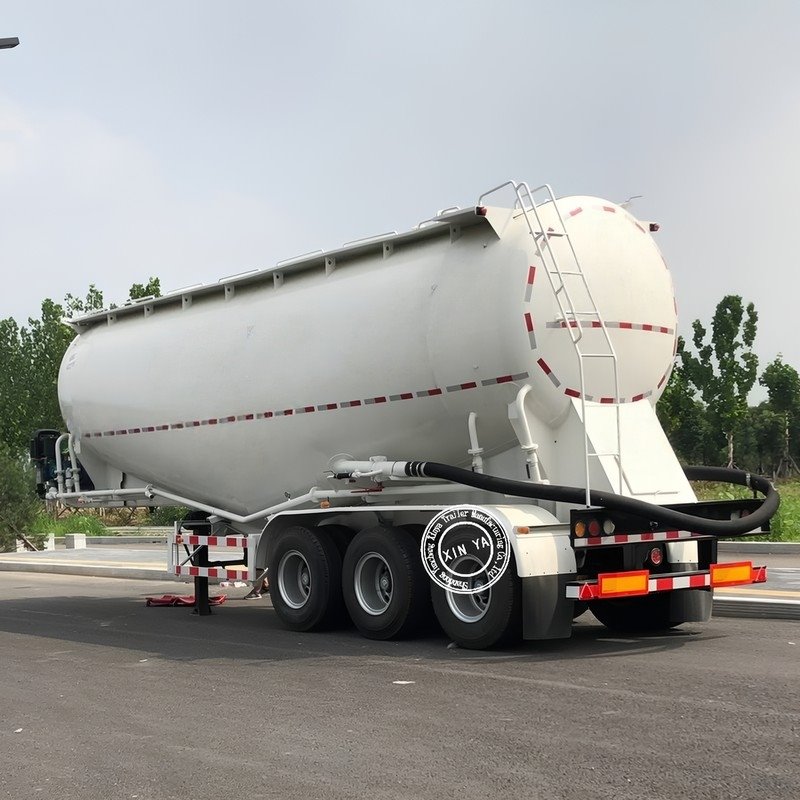

Next, inspect your trailer like your job depends on it-because it does. For hazardous loads, you can't just do a quick walkaround. Check the airtight seals on the manways, the pressure relief valves (make sure they're rated for your specific powder-some need to vent at lower pressures to avoid releasing toxic dust), the grounded bonding straps (critical for flammable stuff to prevent static electricity sparks), and the filter system that keeps powder from blowing out during unloading. We've had clients use old, worn-out trailers for hazardous loads, and every time, they end up with dust on their truck or fines for environmental contamination. A dedicated tanker built for hazardous powders isn't a cost-it's an investment in not losing money to mistakes.
Loading is another step where half the accidents happen. I always tell our customers: never rush loading a hazardous powder. Fine powders can build up static charge as they flow through the loading hose, so you need to slow the flow rate for flammable or reactive powders. For example, a load of lithium powder (super flammable) needs a flow rate low enough that static doesn't build up enough to spark-something like 20 cubic meters per minute, vs. 50 for regular cement. Also, when loading, make sure you don't overfill the tank. Hazardous powders expand slightly with changes in temperature and altitude, and overfilling means no room for that expansion-pressure builds up, and seals blow. Pro tip from our team: use a load level gauge that's calibrated for hazardous powders, not just general dry goods.
Once you're loaded, securing the trailer isn't just about chaining it down (though that's part of it). For hazardous powders, you need to make sure the air system is set correctly. Tanker trailers use air pressure to unload, but before you hit the road, you need to purge the air line of any moisture-moisture can react with some hazardous powders (like certain industrial salts) and cause clogs or even chemical reactions mid-transport. Also, double-check that all valves are closed and locked, and that the hazard placards are visible from all sides. Placards aren't just for show-they tell first responders what's in your trailer if you get in an accident, which could save lives.
Driving with a hazardous powder load is different too. You can't drive like you're in a family minivan. Accelerate and brake slowly-sudden stops or fast starts can make fine powders shift, build static, or even dislodge seals. On winding roads, take curves slower than you would with a regular load-powder's weight can shift, making the trailer tip if you're not careful. Also, avoid idling for long periods in hot weather if you're hauling flammable powders-idling engines can generate heat that raises the tank's temperature, increasing the risk of static or reaction. We had a customer learn this the hard way when he idled for two hours waiting at a weigh station, and a load of aluminum powder sparked-no major accident, but a $1,000 fine and a lot of downtime.
Unloading is the final step, and it's just as important as loading. Never rush unloading hazardous powders. For toxic or reactive powders, make sure the unloading area is properly ventilated-even small amounts of dust can be dangerous if inhaled. Use a dust collection system at the unloading site, not just to keep the area clean, but to comply with environmental regulations. Also, when you're done unloading, clean the trailer thoroughly if you're switching to a different type of powder. Mixing hazardous powders (like a flammable powder with a corrosive one) can cause a reaction that's way more dangerous than either one alone. A quick wipe down isn't enough-use a low-pressure air rinse (if safe for the powder type) to get all residue out of the tank.
Now, I know this sounds like a lot of steps, but here's the thing: when you use the right equipment, it's way simpler than winging it. Our Powder Tanker Trailer is built specifically to handle the unique pressures and safety needs of hazardous powders-with anti-static liners, reinforced seals, and calibrated pressure relief valves. If you're moving heavier bulk hazardous powders, the Cement Tank Semi Trailer's sturdy frame and air-tight unloading system is a perfect fit. And even if you're still figuring out exactly what gear you need, our team's been doing this for years, so we can help you pick the right Dry Powder Tank Trailer (or other model) that matches your specific powder type and transport needs.
I get it-hauling hazardous stuff can feel overwhelming, but it doesn't have to be. The biggest mistake we see new haulers make is assuming that a standard tanker can do the job, or cutting corners on safety checks. But when you prioritize the right gear, follow those pre-transport, loading, driving, and unloading steps, you'll stay safe, compliant, and avoid costly mistakes.
If you're in the market for a tanker that's designed for hazardous powder transport, or you have questions about what equipment works best for your specific loads, reach out to our team to chat through your needs. We don't do one-size-fits-all, and we're here to make sure you have the right tools to get the job done right.
References
- U.S. Department of Transportation (DOT) Hazardous Materials Regulations (49 CFR Parts 100-185)
- National Institute for Occupational Safety and Health (NIOSH) Guidelines for Handling Fine Particulate Hazards
- Powder and Bulk Solids Handling Association (PBSHA) Safety Standards for Dry Bulk Transport
- Occupational Safety and Health Administration (OSHA) Hazard Communication Standard (HCS) for Powders


