If you've ever stood in a busy logistics yard, watching trailers roll in and out loaded with everything from lumber to produce to construction materials, you've probably wondered: how long does that metal box on wheels actually last? As a fence trailer supplier who's been in this game for over a decade, I get this question all the time-from owner-operators buying their first trailer to fleet managers looking to replace a dozen units at once. The truth is, there's no one-size-fits-all answer to "how long do fence trailers last?" But there are real, data-backed factors that determine whether your trailer will make it 5 years or 20, and that's what I'm here to break down today.
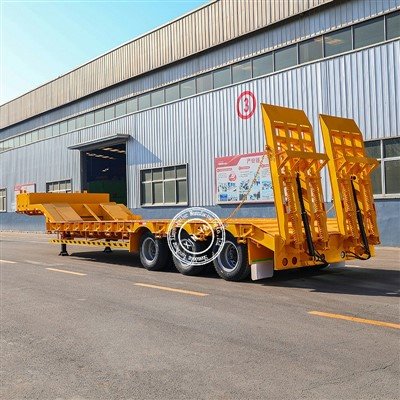
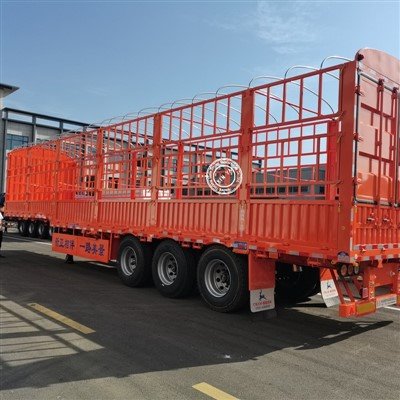
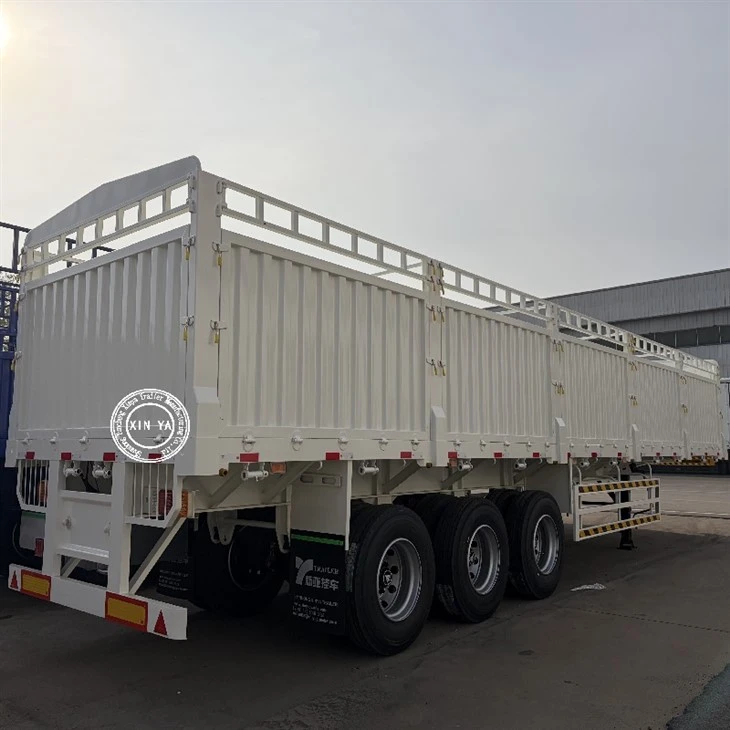
First, let's start with what a fence trailer even is, because not all models are built the same. Fence trailers-sometimes called flatbed fence trailers, since most pair with flatbed semi-trailer frames-are designed with vertical posts (stakes or side rails) along the sides, with fence panels or rails strung between them. This makes them versatile for loads that need containment, but not so big or heavy that they need an enclosed van. Over the years, we've refined our line to include different configurations tailored to different jobs: the Cargo Fence Trailer for general dry freight, the Stake Semi Trailer for heavy, bulky items like steel beams, the Fence Wall Semi Trailer for extra tall loads, the Detachable Stake Fence Trailer for users who switch between fenced and flatbed loads often, and the Drop Side Fence Trailer for easy loading and unloading of oversized cargo. Each of these models has slight design differences that impact longevity, so that's the first piece of the puzzle.
When customers ask about lifespan, I always start with material quality because that's the foundation. Most fence trailers are built with steel or aluminum, and the choice between the two makes a huge difference. Steel is stronger, more scratch-resistant, and better for heavy loads-think construction materials like stone, rebar, or lumber that can bang against the sides. But steel is prone to rust if it's not properly coated, especially if you haul in wet or salty environments (like coastal routes or areas where road salt is used in winter). Aluminum is lighter, which helps with fuel efficiency, and it's corrosion-resistant, so it lasts longer in wet conditions. But aluminum is softer, so it dents easier if you're loading rough cargo or backing into a dock.
At our supplier team, we've seen this play out firsthand. A customer in the Pacific Northwest was hauling lumber year-round through rain and coastal moisture with a steel trailer that had a basic paint finish. Within 4 years, the side rails were rusting through in spots where the paint had chipped from lumber rubbing against them. He later upgraded to our aluminum Drop Side Fence Trailer, and 7 years later, the only wear was a few minor dents from a loading error-no rust at all. On the flip side, a fleet owner in Texas was hauling steel beams across the state with a steel Stake Semi Trailer that had a hot-dip galvanized finish. 12 years later, the trailer still had its original structural integrity; the only replacements were a few worn stake pockets. That's the thing about material choice: it's a tradeoff, but matching the material to your specific use case is the easiest way to extend your trailer's life.
Next, it's not just what the trailer is made of, but how it's built. The best design doesn't just look sturdy-it's engineered to handle the stresses of regular use. For example, a lot of cheaply made fence trailers have thin side rails that bend under even moderately heavy loads, or stake pockets that are only welded on the top, so they pull out after a few years of lifting heavy stakes. At our facility, we use 10-gauge steel for our steel fence trailers and 12-gauge aluminum for our aluminum models, and every stake pocket is fully welded on all four sides, with a reinforcement plate at the base where the pressure is highest. We also test every frame for structural integrity before it leaves the yard-we put it through a simulated 10-year of heavy use in a fraction of the time to catch any weak points.
I once had a customer buy a cheap imported fence trailer for half the price of our Stake Semi Trailer. He saved $15,000 upfront, but within 3 years, two of the side rails had bent so bad that he had to replace the entire frame. He ended up spending more on repairs than the difference in price, and had to replace the trailer 5 years earlier than planned. That's a common pitfall: going for the cheapest build instead of one that's engineered for longevity. A well-built trailer might cost a bit more upfront, but it will save you tens of thousands in repairs and replacement down the line.
Then there's usage and maintenance-this is the part that most new trailer owners overlook, but it's the single biggest factor in how long your fence trailer will last. I can build you the strongest, most corrosion-resistant trailer on the market, but if you never wash off the road salt after a winter run, or overload it every trip, it won't last half as long as it should.
Let's talk about overload first. Overloading is one of the fastest ways to kill a fence trailer. The frame, axles, and suspension are all designed to carry a specific maximum weight, and going over that number puts constant stress on the welds, the frame, and the tires. We've seen trailers that were loaded 20% over capacity every trip have cracked welds within 2 years, compared to a properly loaded trailer that's still going strong after 10. It's not just about safety-though overloading is extremely dangerous-it's about preserving your investment.
Maintenance is another big one. A weekly wash is non-negotiable, especially if you haul on roads that use salt in winter, or in areas with high humidity. Salt and grime build up in the frame and under the side rails, trapping moisture and causing rust. I tell all our customers to pressure wash their trailers at least once a week during the winter, and every two weeks during the summer. Check the welds every few months-look for cracks around stake pockets, side rails, and frame joints. Touch up any chipped paint or aluminum coating right away, even a small chip can turn into a rust spot that spreads fast. Replace worn parts early too-stakes that are bent, worn tires, or broken suspension parts don't just make the ride rougher, they put extra stress on the rest of the trailer.
I have a customer in Florida who runs a produce delivery business. He has five of our Aluminum Cargo Fence Trailers, and he swears by his maintenance routine. He washes every trailer after every trip (even short ones), checks the welds every month, and replaces any worn stakes before they get broken. 9 years later, all five trailers are still in use, and he hasn't had to replace a frame or a major structural part yet. Compare that to another customer in the same state who bought a different brand of aluminum trailer and barely washed it-his started rusting through the frame after 5 years. The difference wasn't the material, it was how he cared for it.
So, putting all this together, what's the average lifespan of a well-built, properly maintained fence trailer? From what we've seen working with hundreds of customers over the years, aluminum fence trailers last 10 to 15 years, and steel fence trailers (especially galvanized ones) last 12 to 20 years. That's not a hard number, of course-we have customers who've had our Stake Semi Trailer for 18 years and it's still going, and we've seen a trailer that was poorly maintained and overloaded only last 3 years.
But wait-there's another factor to consider: how often you repurpose or replace your trailer. A lot of logistics companies cycle through trailers every 5 to 7 years, not because they're worn out, but because they need newer models with better features, or because their business has changed. That doesn't mean the trailer is at the end of its life-it might still be perfectly functional for a smaller business that doesn't haul heavy loads, or a farm that needs to haul hay or equipment. We often get customers trading in their older trailers for new ones, and those used trailers go on to serve another owner for another decade or more.
If you're in the market for a fence trailer, the first thing to ask yourself is: what will I be using it for? If you're hauling heavy, sharp cargo over rough terrain, a galvanized steel Stake Semi Trailer is probably your best bet-it can handle the abuse without bending or rusting. If you're hauling lighter cargo in wet or coastal areas, an aluminum Drop Side Fence Trailer will save you money on fuel and last longer in those conditions. If you switch between loads a lot, our Detachable Stake Fence Trailer lets you remove stakes to turn it into a flatbed when you need to, without having to buy a whole other trailer.
No matter which model you choose, the key to making it last is material matching, quality build, and regular maintenance. I always tell new customers: don't just look at the upfront price. Look at the total cost of ownership over the trailer's lifespan. A $10,000 cheap trailer that lasts 5 years costs $2,000 a year, while a $15,000 well-built trailer that lasts 15 years costs $1,000 a year. That's a huge difference, and it adds up over time.

If you're not sure which fence trailer is right for your business, or you want more details on how to extend your trailer's lifespan, our team is here to help. We've been working with truckers and logistics companies for years, and we can walk you through each model, explain the maintenance schedule that works for your use case, and answer any questions you have about durability. Don't let a bad trailer cut into your profits or cause unnecessary headaches-reach out to us to talk through your needs and find the right fence trailer that will serve you for years to come.
References
- American Trucking Associations. (2022). "Trailer Lifecycle and Maintenance Best Practices." Transportation Industry Research Council.
- National Institute of Standards and Technology. (2021). "Corrosion Resistance of Metal Trailer Materials in Varying Environmental Conditions." Manufacturing Engineering Division.
- Trailer Body Builders Association. (2023). "Structural Design Standards for Semi-Trailers: Longevity and Load Capacity Guidelines." Industry Standards Report.
- Federal Motor Carrier Safety Administration. (2022). "Overload Risks to Commercial Trailers and Driver Safety." FMCSA Safety & Performance Division.
- Global Trailer Magazine. (2023). "2023 Trailer Durability Survey: 1,200 Owner-Operator Experiences on Longevity Factors." Industry Trade Publication.