If you've ever stood at a fuel station watching a big tanker rumble by, or wondered how construction crews get hot asphalt to a job site on time, you've probably thought about those massive trailers behind semi-trucks-tanker trailers, right? I'm [your company name, removed per request], and as someone who's been supplying these bad boys for years, one of the most common questions I get from new customers is: "What are the different sizes of tanker trailers anyway?" It's not a one-size-fits-all thing, that's for sure. The size you need depends on what you're hauling, road rules in your area, and even how much space you have to load and unload. Let me break this down like I would for a first-time buyer who's just trying to wrap their head around it.
First off, let's get the basics straight. Tanker trailers are basically big, cylindrical tanks on wheels built to carry liquids or gases safely. You can't just throw any fluid in there-they're designed for specific stuff: fuel, chemicals, LPG, asphalt, you name it. Each of these cargo types affects the size, too, because some are heavier, some need to be pressurized, and some have strict regulations on how much you can carry per trip.
Let's start with the small end of the scale, because not every job needs a giant 10,000-gallon behemoth. Small tanker trailers are usually under 3,000 gallons (that's about 11,350 liters for you metric folks). These are perfect for tight spaces-like delivering heating oil to a handful of suburban homes, or hauling small batches of chemicals to a local factory. The thing with small trailers is their biggest perk: maneuverability. If you're working on narrow country roads or in industrial zones where turning around is a pain, a smaller trailer is way easier to handle. But here's the catch: because they carry less, you'll make more trips, which adds up to higher labor costs over time. I've had customers go with small trailers because they thought they'd save on initial cost, only to realize they're running three extra loads a week-oops.
Next up are the mid-sized tanker trailers, which is where a lot of our customers land. These typically hold between 3,000 and 7,000 gallons (11,350 to 26,500 liters). They strike that sweet spot between capacity and maneuverability. For example, if you're a fuel distributor covering a medium-sized town, a mid-sized oil tanker lets you drop off multiple gas stations in one trip without feeling like you're navigating a space shuttle. We also carry specific mid-sized models for different cargoes-like aluminum alloy oil tanker trailers, which are super lightweight compared to steel, so you can push more fuel without overloading, and they resist corrosion way better. Check out our aluminum alloy oil tanker trailer page here if you're curious about how material ties into size.
Now, when you get into the 7,000 to 11,600-gallon range, that's the large tanker trailer territory. These are the workhorses of long-haul transport. If you're moving bulk fuel from a refinery to a distribution center, or hauling large volumes of industrial chemicals across states, this is your size. The key here is compliance. Every country and even states/provinces have laws on maximum load weight and volume for semi-trailers. In the US, for example, federal rules limit single trailers to 80,000 pounds gross vehicle weight (GVW), so a large tanker's size is balanced with the weight of the cargo to stay under that limit. I've seen people try to cram more into a large trailer, only to get pulled over and hit with heavy fines-avoid that.
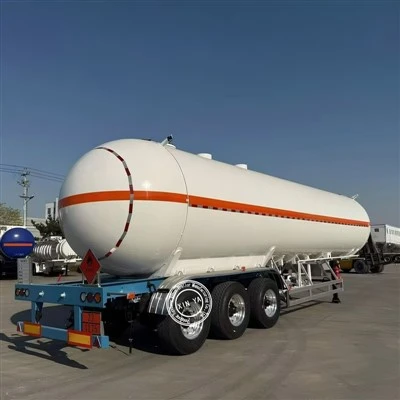
Wait, but what about specialized tankers for things like LPG or asphalt? Those have their own size categories, too, and not just because of the cargo. Let's talk LPG first-liquefied petroleum gas needs to be pressurized, so their tanks are thicker and built differently than liquid tankers. Small LPG tanker trailers are for local deliveries to homes with propane tanks, while large LPG semi trailers can carry up to 11,000 gallons. Our LPG tank semi trailer models are designed with safety valves and insulation to keep the gas stable during transport-you can check them out here. And if you need something even bigger for long-haul LPG, our LPG gas tanker trailers are built for cross-country runs with reinforced tanks and advanced pressure controls.
Then there's asphalt. Oh, asphalt is a tricky one because it has to stay hot, so the tanker has to have heating systems and insulation. That affects the size a bit, too-large asphalt tankers are usually in the 6,000 to 8,000-gallon range, because if you make them too big, the heating system can't keep all the asphalt at the right temperature (around 300°F, yikes) during a long drive. We carry asphalt tanker trailers and bitumen tanker semi trailers built with special heating coils that use the exhaust from the truck's engine to keep the asphalt molten. They're also insulated so you don't lose heat halfway to a job site-nothing worse than showing up with solid asphalt that can't be spread.
Let's not forget about the differences between single tanker trailers and semi trailers, because that plays into size too. A single tanker trailer is pulled by a truck, with no separate cab in the trailer itself-they're usually smaller, under 5,000 gallons, and used for local runs. Semi trailers, on the other hand, have the truck cab separate, and they're longer, so they can carry way more. Most of the large tankers I mentioned earlier are semi trailers, because their length (around 53 feet in the US, per federal length limits) allows for a bigger tank without violating road rules.
Another thing that affects size: the type of road you're on. If you're operating in mountainous areas, a larger, heavier trailer is going to put more strain on the truck and use more fuel, so even if you could go big, you might want to go medium to keep costs down and keep drivers safe. Flat, open highways? Go big-you'll get more cargo per trip, which is better for your bottom line. A lot of my customers forget to factor in terrain, and they end up with a giant trailer that can't climb local hills without struggling.
Weight is another big one that ties into size, especially for liquid cargo. For example, water is heavy-about 8.3 pounds per gallon. So a 10,000-gallon water tanker is going to be 83,000 pounds when full, which is already over the US GVW limit of 80,000 pounds. So you can't just make a water tanker any size you want-you have to calculate how much the trailer itself weighs (tare weight) plus the cargo, and stay under that limit. That's why aluminum alloy tankers are so popular for fuel or water-they're lighter, so you can carry more cargo without going over the weight limit. That's a big reason our aluminum alloy oil tanker trailers sell so well for bulk fuel delivery.
Now, let's talk about what size is right for you. Here's a quick checklist I give every new customer:


- What are you hauling? LPG, asphalt, fuel, chemicals? Each has size and material constraints.
- How far are you driving? Local short trips? Mid-sized. Long hauls? Large.
- What's the road like? Narrow, hilly roads? Stick to small or medium. Open highways? Go big.
- What are the local regulations? Don't get fined-check volume and weight limits in your area.
- How many trips do you want to make? Smaller = more trips, larger = fewer, but only if it fits your needs.
I've been in this game long enough to see customers make all the mistakes-buying a giant trailer that can't fit under a loading dock, going too small and running up labor costs, even buying an LPG trailer that wasn't built for the pressure in their region. The key is to talk to someone who knows the ins and outs, not just pick the biggest one you can afford.
At the end of the day, tanker trailer sizes aren't arbitrary-they're all about balancing capacity, safety, maneuverability, and cost. Whether you need a small local hauler for propane, a mid-sized oil tanker for neighborhood fuel runs, or a large semi trailer for bulk chemical transport, there's a size (and specialized model) that fits. We've got options for every cargo type, from LPG tank semi trailers to bitumen tanker semi trailers, all built to meet safety standards and get the job done right.
If you're in the market for a new tanker trailer and you're not sure which size is right for your operation, don't hesitate to reach out. We can walk you through the different sizes, break down the costs, and find the perfect fit for your needs. No pressure, just straight talk about what works.
References
Federal Motor Carrier Safety Administration. (2024). Size and Weight Regulations for Commercial Motor Vehicles.
American Petroleum Institute. (2023). Specification for Tank Truck Trailers for Petroleum Products.
National Board of Boiler and Pressure Vessel Inspectors. (2022). Guidelines for LPG Tanker Trailer Design and Safety.