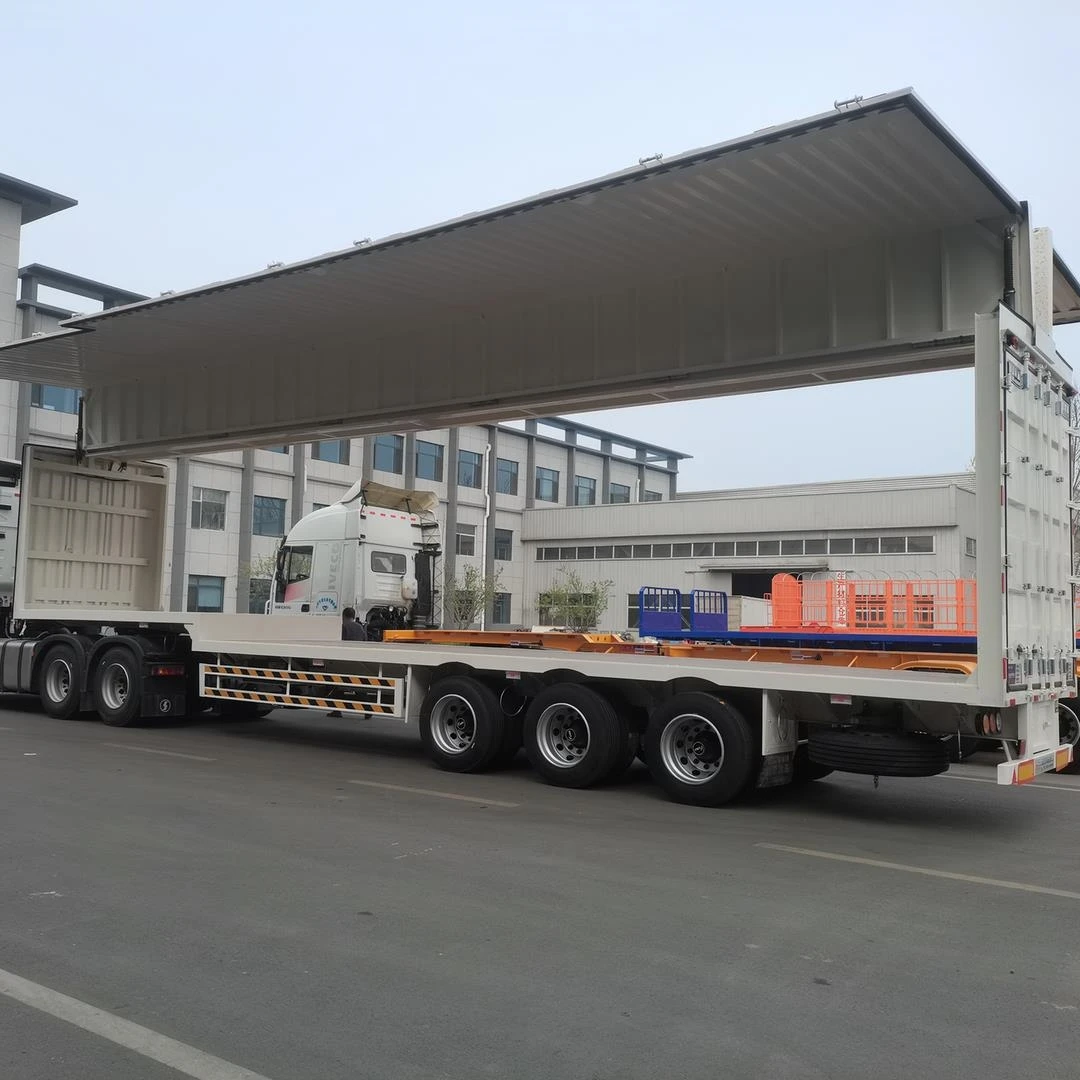
When purchasing a box-type semi-trailer, the vehicle configuration should be determined based on actual transport requirements. For the transport of general industrial goods or fast-moving consumer goods (FMCG), a standard box structure is suitable, with a focus on balancing load capacity and cargo volume. If the cargo involves cold chain, fresh produce, or pharmaceuticals, priority should be given to refrigerated or insulated trailers, ensuring the refrigeration system's stability and temperature control range meet specific needs.
Pay close attention to the vehicle's core structure and materials. The chassis should be constructed from high-strength steel with a robust reinforcement design to ensure reliability during long-term, heavy-load operations. Regarding the box body, steel structures offer lower costs but higher curb weight; aluminum alloy structures are lighter but more expensive; and composite panels provide a balance between thermal insulation and weight reduction. Material choice directly impacts the vehicle's service life, fuel consumption, and loading efficiency, requiring a decision based on transport frequency and route conditions.
Safety and ease of maintenance are also critical factors. Key checks should include whether the braking system utilizes a dual-circuit pneumatic design, whether the suspension system is suited to actual road conditions, and the reliability of the electrical system and sealing performance. Additionally, consider the manufacturer's after-sales service capabilities, the availability of universal spare parts, and the ease of repair. Ultimately, purchasing a box-type semi-trailer is not merely about selecting the vehicle itself, but involves a comprehensive decision regarding long-term operating costs and transport efficiency.