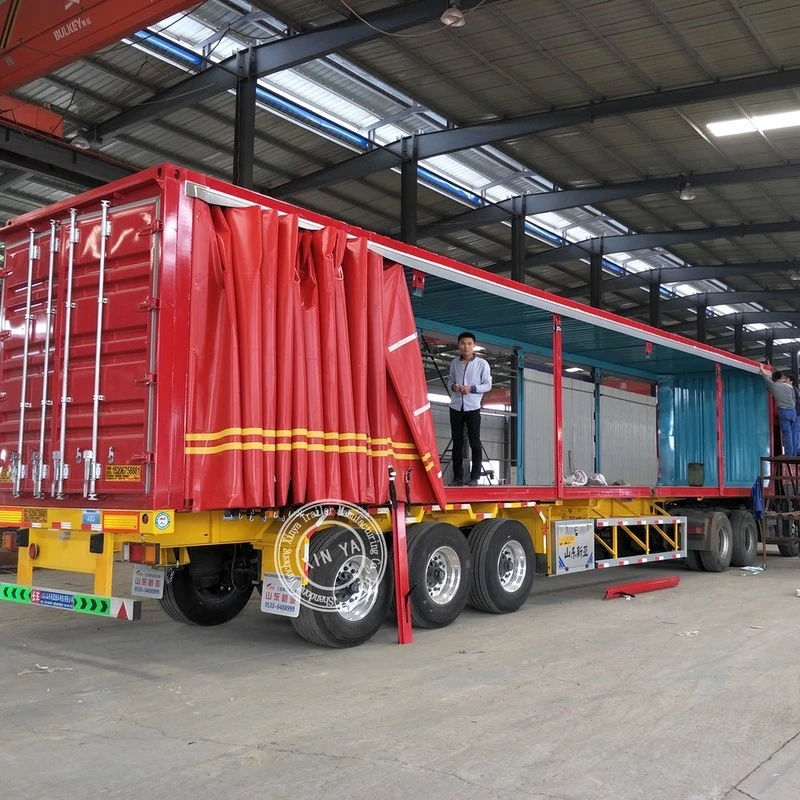
The standards for box-type semi-trailers are established through a combination of national regulations, industry specifications, and corporate manufacturing standards, focusing primarily on dimensions, load-bearing capacity, safety, and environmental protection.
Basic Vehicle Dimensions
Vehicles must generally comply with standard limits for road transport; for instance, vehicle length, width, and height must not exceed national road traffic standards. The width of box-type semi-trailers is typically kept within 2.55 meters, while height and length are designed within compliant ranges based on the specific vehicle configuration to ensure roadworthiness and suitability for highway and trunk-line logistics operations.
Safety Performance Standards
Key requirements cover braking systems, lighting and signaling systems, and structural integrity. Braking systems generally must meet technical specifications for dual-circuit pneumatic braking to ensure reliable stopping power under heavy loads. Lighting and signaling devices must satisfy visibility requirements for night driving and complex environments. Additionally, the chassis and box structures must pass strength and fatigue tests to guarantee safety during long-term use.
Manufacturing and Environmental Standards
Materials and coating processes for the trailer body must meet requirements regarding corrosion resistance, fire safety, and environmental protection; certain models must also adhere to standards aligned with trends toward lightweight design and energy conservation/emission reduction. Refrigerated semi-trailers are subject to additional specialized specifications regarding temperature control and thermal insulation performance for cold-chain transport. Overall, these standards collectively ensure that box-type semi-trailers meet unified requirements for safety, regulatory compliance, and practicality.